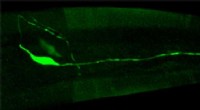
Specifically, neurons, the cells of the nervous system, have dendrites, which are branch-like structures that receive signals from other neurons.
Here's why this is important:
* Signal Reception: Dendrites act as the "antennae" of the neuron, receiving chemical and electrical signals from other neurons.
* Increased Surface Area: The branching nature of dendrites significantly increases the surface area for receiving signals, allowing neurons to communicate with many other neurons simultaneously.
* Signal Integration: The dendrites integrate incoming signals from multiple sources, which is crucial for complex brain functions.
So, while other organs might have cells with some branching features, the nervous system's neurons are the most iconic example of cells with branched structures.