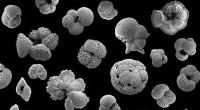
* Round/Spherical: Many single-celled organisms, like bacteria and some types of algae, are round. This shape provides a large surface area for nutrient exchange.
* Cube-like: Some cells in tissues like the liver and skin are cube-shaped, which allows for efficient packing and stability.
* Flat/Scale-like: Epithelial cells that line surfaces, like those in your skin and the lining of your mouth, are often flattened. This allows for a smooth surface and efficient diffusion of substances.
* Long and Thin: Muscle cells are elongated and cylindrical, which allows for contraction and movement. Nerve cells (neurons) have long, thin extensions called axons that transmit signals throughout the body.
* Irregular: Some cells, like amoebas, have no fixed shape and can change their form to move and engulf food.
It's important to remember that there is no one "standard" shape for cells. The shape of a cell is determined by its function and the environment it lives in.