Here's why:
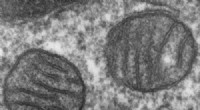
* Small ribosomes: Both mitochondria and chloroplasts have their own ribosomes, which are smaller than the ribosomes found in the cytoplasm of eukaryotic cells. This is because their ribosomes are more similar to those found in prokaryotic cells.
* Circular DNA: Both mitochondria and chloroplasts have their own circular DNA molecules, called mitochondrial DNA (mtDNA) and chloroplast DNA (cpDNA), respectively. This is another similarity to prokaryotes, which also have circular DNA.
This similarity to prokaryotes is one of the key pieces of evidence supporting the endosymbiotic theory, which proposes that mitochondria and chloroplasts originated from free-living bacteria that were engulfed by early eukaryotic cells. Over time, these bacteria became integrated into the eukaryotic cells and evolved into the organelles we see today.