Here's a breakdown:
* Mitochondria are the "powerhouses" of the cell: They are responsible for producing the majority of the cell's energy through cellular respiration.
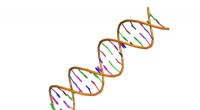
* Mitochondrial DNA (mtDNA) is circular: It's a small, circular molecule, unlike the linear DNA found in the nucleus.
* mtDNA codes for essential proteins: These proteins are involved in key mitochondrial processes like electron transport chain, oxidative phosphorylation, and ATP production.
* Mitochondria have their own ribosomes: These are the protein-making machinery, just like the ribosomes in the cytoplasm.
However, it's important to note that:
* Mitochondria don't produce all of their proteins: They still rely on the cell's nuclear DNA for many proteins needed for their function.
* mtDNA is inherited maternally: You inherit your mitochondrial DNA solely from your mother.
So, in short, mitochondria do have their own DNA and the ability to produce some of their own proteins, making them semi-autonomous within the cell.