1. Fossil Evidence:
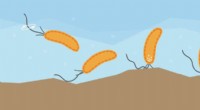
* Stromatolites: These layered rock formations are the oldest known fossils, dating back to 3.5 billion years ago. They are formed by mats of bacteria and algae, indicating the presence of early microbial life.
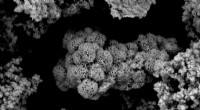
* Microfossils: Tiny fossils of single-celled organisms have been found in ancient rocks, further supporting the existence of early unicellular life.
2. Chemical Evidence:
* Isotopes: Analysis of ancient rocks reveals specific ratios of carbon isotopes (like carbon-12 and carbon-13) that are indicative of biological activity. This suggests that early life forms were photosynthetic, similar to bacteria.
* Organic molecules: In ancient rocks, scientists have found remnants of organic molecules like amino acids, which are the building blocks of proteins and essential for life.
3. Biological Processes:
* Similarities in metabolism: Many biochemical processes in modern single-celled organisms are similar to those found in more complex organisms, suggesting a common ancestor.
* Cellular structure: The basic structure of cells, with a membrane, genetic material (DNA or RNA), and mechanisms for energy production, are found in all known organisms, hinting at a common origin.
4. The "RNA world" Hypothesis:
* This hypothesis suggests that early life may have been based on RNA, a molecule that can act as both a carrier of genetic information and a catalytic enzyme. RNA is simpler than DNA and plays a crucial role in modern cells, making it a plausible candidate for early life.
5. Evolution:
* Evolutionary theory: The theory of evolution, supported by a vast amount of evidence, suggests that complex organisms evolved from simpler ones. This makes the idea of simple unicellular organisms as the first life forms highly likely.
6. Experimental Evidence:
* Abiogenesis experiments: Scientists have attempted to recreate the conditions of early Earth in the laboratory. While creating fully functional life has not been achieved, these experiments have produced simple organic molecules from inorganic materials, supporting the possibility of life arising from non-living matter.
Conclusion:
While we can't directly observe the first life forms, the combined evidence from fossils, chemical analysis, biological processes, and the "RNA world" hypothesis strongly suggests that early life was likely simple, unicellular organisms.