While pinpointing the *exact* first organism is impossible, the current scientific consensus points to these early life forms:
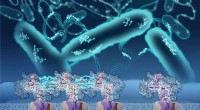
* Archaea: These are single-celled organisms that are often found in extreme environments like hot springs and salt lakes.
* Bacteria: These are also single-celled organisms, and they are incredibly diverse, playing crucial roles in many ecosystems.
These prokaryotes arose around 3.5 to 3.8 billion years ago (bya), likely in hydrothermal vents or shallow pools on the early Earth. They were simple in structure, lacking a nucleus and other membrane-bound organelles.
Eukaryotic cells (cells with a nucleus and organelles), including those that form the basis of plants, animals, fungi, and protists, developed much later, around 2 billion years ago.
Therefore, the earliest life forms were prokaryotes, paving the way for the evolution of all other organisms we see today.