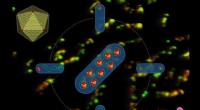
Molecular evidence is the use of biological molecules like DNA, RNA, and proteins to understand evolutionary relationships, identify species, and investigate biological processes. It's like using a molecular detective kit to unravel the mysteries of life!
Here's a breakdown of molecular evidence:
1. DNA Sequencing:
* The Blueprint of Life: DNA holds the genetic code for all living organisms. By comparing DNA sequences, scientists can determine how closely related species are.
* Evolutionary History: Differences in DNA sequences reflect the accumulation of mutations over time. These mutations act as a molecular clock, allowing scientists to estimate when species diverged.
* Phylogeny: Scientists use DNA sequences to build evolutionary trees (phylogenies), showing how species are related.
2. RNA Sequencing:
* Gene Expression: RNA acts as a messenger molecule, carrying genetic information from DNA to build proteins. By analyzing RNA sequences, scientists can study how genes are turned on and off in different tissues and conditions.
* Microbiome Studies: RNA sequencing can identify the diverse microbial communities (microbiomes) that inhabit our bodies and environments.
3. Protein Sequencing:
* Building Blocks of Life: Proteins are essential for a wide range of biological functions. Comparing protein sequences can reveal evolutionary relationships and pinpoint functional similarities and differences between species.
* Disease Diagnosis: Protein markers can be used to diagnose diseases like cancer and infections.
4. Other Molecular Techniques:
* ELISA: Enzyme-linked immunosorbent assay uses antibodies to detect specific proteins and other molecules in samples.
* PCR: Polymerase chain reaction amplifies specific DNA sequences, allowing for sensitive detection of even trace amounts of genetic material.
* Flow Cytometry: This technique uses lasers and fluorescence to analyze and sort cells based on their molecular properties.
Applications of Molecular Evidence:
* Evolutionary Biology: Understanding the origins and diversification of life.
* Forensic Science: Identifying individuals and linking them to crime scenes.
* Medicine: Diagnosing diseases, developing new treatments, and understanding disease mechanisms.
* Agriculture: Improving crop yields and resistance to diseases.
* Environmental Science: Monitoring pollution and biodiversity.
Advantages of Molecular Evidence:
* Highly sensitive and specific: Can detect even small differences between organisms.
* Objective and quantifiable: Provides numerical data that can be analyzed statistically.
* Widely applicable: Can be used to study a wide range of biological processes and organisms.
Limitations of Molecular Evidence:
* Data interpretation: Requires specialized expertise and statistical analysis.
* Cost and time: Can be expensive and time-consuming to generate and analyze.
* Data complexity: Can be difficult to interpret complex datasets.
Overall, molecular evidence revolutionized our understanding of life. It offers powerful tools for studying evolution, disease, and the environment, unlocking countless new insights into the intricacies of the living world.