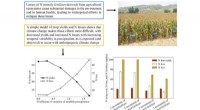
* Plants: These are the most common producers and are found in a wide variety of environments, from forests and grasslands to deserts and oceans. They use photosynthesis to convert sunlight, water, and carbon dioxide into sugars for energy.
* Algae: These are single-celled or multicellular aquatic organisms that also use photosynthesis. They play a vital role in aquatic ecosystems, producing oxygen and serving as food for other organisms.
* Cyanobacteria: These are single-celled bacteria that are also photosynthetic. They were responsible for introducing oxygen into Earth's atmosphere billions of years ago and are still important producers in many environments.
* Chemosynthetic Bacteria: These bacteria use energy from inorganic chemicals, like sulfur or methane, to produce food. They are found in extreme environments like deep-sea vents and hot springs.
In essence, any organism that can produce its own food through a process like photosynthesis or chemosynthesis is considered a producer.