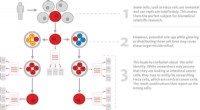
* Mutations create variation: Mutations introduce changes to the genetic code, altering the instructions for building and maintaining an organism. These changes can be small (single nucleotide changes) or large (whole gene deletions or duplications).
* Variation is essential for natural selection: Natural selection, the mechanism that drives evolution, relies on variation in a population. If all individuals were identical, there would be no advantage to one individual over another in a changing environment.
* Beneficial mutations lead to adaptation: Some mutations can be beneficial, providing an individual with a slight advantage in their environment. This advantage might be increased survival, better reproduction, or resistance to disease. These individuals are more likely to survive and pass on their beneficial mutation.
* Harmful mutations are often eliminated: Mutations can also be harmful, reducing an individual's ability to survive or reproduce. These individuals are less likely to pass on their harmful mutation.
* Neutral mutations can be preserved: Some mutations are neither beneficial nor harmful; they have no immediate impact on the organism's fitness. These mutations can persist in the population and accumulate over time.
Evolution is a gradual process. It occurs over many generations as beneficial mutations become more common in the population, while harmful mutations are eliminated. The accumulation of these changes over time can lead to significant evolutionary changes, such as the development of new species.
It's important to note:
* Mutations are random events; they don't occur because an organism "needs" them to adapt to its environment.
* The environment selects for beneficial mutations, making them more common in the population.
In summary, mutations in DNA provide the raw material for evolution, and natural selection acts on this variation to drive the process of adaptation and diversification.