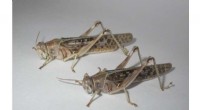
1. Variation: Within any population of organisms, there's natural variation in traits. This variation can be in physical features, behaviors, or even the genes that determine those traits.
2. Inheritance: These traits are passed down from parents to offspring through genes.
3. Differential Survival and Reproduction: In a given environment, some traits might make an organism more likely to survive and reproduce. Organisms with these "advantageous" traits will have more offspring, and their traits will become more common in the population over time. Conversely, organisms with traits that make them less suited to the environment will have fewer offspring, and their traits will become less common.
4. Adaptation: Over many generations, this process of natural selection can lead to the adaptation of populations to their environments. Adaptations are traits that increase an organism's fitness – its ability to survive and reproduce.
In essence, natural selection is the process by which organisms better adapted to their environment tend to survive and reproduce more successfully. This leads to the gradual evolution of populations over time.
Examples of Natural Selection:
* Antibiotic Resistance: Bacteria that are resistant to antibiotics are more likely to survive and reproduce in the presence of antibiotics, leading to the evolution of antibiotic-resistant strains.
* Camouflage: Animals with camouflage that blends them into their environment are less likely to be preyed upon, making them more likely to survive and reproduce.
* Darwin's Finches: Different species of finches on the Galapagos Islands evolved beaks specialized for different food sources, demonstrating the power of natural selection to shape diversity.
It's important to note:
* Natural selection does not create new traits; it simply favors existing ones.
* Evolution is not a directed process; it's shaped by the environment and the random variations that arise in populations.
* Natural selection acts on individuals, but its effects are seen in populations over time.
In summary: Natural selection is a powerful mechanism that leads to the evolution of life. It's a cornerstone of modern biology and explains the incredible diversity of life on Earth.