1. Specificity:
* Lock-and-key model: This model describes the enzyme active site as a specific shape, much like a lock, which can only accommodate a substrate with a complementary shape, like a key.
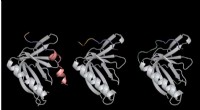
* Induced-fit model: A more refined model, it acknowledges that the active site can slightly change shape to better fit the substrate, like a glove adjusting to a hand.
2. Binding:
* The substrate binds to the active site through weak interactions, like hydrogen bonds, ionic bonds, and van der Waals forces.
* This binding is crucial for catalysis, allowing the enzyme to bring the substrate into the correct orientation and proximity for a reaction to occur.
3. Catalysis:
* Once bound, the enzyme facilitates the chemical reaction by:
* Stabilizing the transition state: The active site lowers the activation energy of the reaction by providing an alternative pathway for the reaction to proceed.
* Orienting the substrate: The enzyme positions the substrate in a way that favors the formation of the desired product.
* Providing catalytic groups: The active site can contain amino acid residues that act as catalysts, donating or accepting electrons to facilitate bond breaking and forming.
4. Product release:
* Once the reaction is complete, the product(s) dissociate from the active site, allowing the enzyme to bind to new substrate molecules and repeat the catalytic cycle.
In summary:
* The active site of an enzyme is highly specific for its substrate.
* This specificity is achieved through the shape of the active site and the interactions between the enzyme and the substrate.
* Binding of the substrate to the active site is essential for catalysis and lowers the activation energy of the reaction.
* The enzyme promotes the formation of products by facilitating the chemical reaction, and then releases them to continue the catalytic cycle.