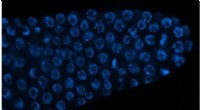
Here's a breakdown of its key functions:
* Stores and protects DNA: The nucleus safeguards the genetic material, ensuring its integrity and stability.
* Controls gene expression: It regulates which genes are activated and transcribed into RNA, ultimately determining which proteins are produced.
* Facilitates DNA replication: During cell division, the nucleus duplicates the DNA so each new cell receives a complete set of genetic instructions.
* Ribosome biogenesis: It produces ribosomes, the cellular machinery responsible for protein synthesis, by transcribing and processing ribosomal RNA.
Here's a visual analogy: Imagine the nucleus as the city hall of a city. It contains all the blueprints and plans for the city's development and maintenance. It also directs the construction of new buildings (proteins) and ensures the smooth functioning of the city.
Key features:
* Nuclear envelope: A double membrane that encloses the nucleus and regulates the passage of molecules in and out.
* Nucleolus: A dense region within the nucleus where ribosomes are assembled.
* Chromatin: The complex of DNA and proteins that make up chromosomes.
* Nuclear pores: Channels in the nuclear envelope that allow selective transport of molecules between the nucleus and cytoplasm.
Overall, the nucleus plays a vital role in maintaining the cell's identity, regulating its functions, and ensuring the continuity of life.