Here's a breakdown:
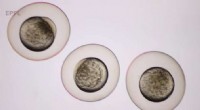
* Cell: The basic unit of life. Each cell is a self-contained entity that carries out all the necessary functions for life.
* Tissue: A group of similar cells that work together to perform a specific function.
* Organ: A structure made up of different tissues that work together to perform a complex function.
* Organ System: A group of organs that work together to carry out major bodily functions.
* Organism: A complete living being made up of multiple organ systems.
Examples of tissues:
* Epithelial tissue: Covers surfaces of the body and lines cavities.
* Connective tissue: Supports and connects other tissues.
* Muscle tissue: Enables movement.
* Nervous tissue: Transmits signals throughout the body.
So, when cells come together and specialize, they form tissues, which are the building blocks of organs and ultimately, the entire organism.