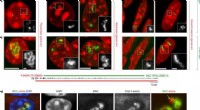
1. Cells:
- The basic building block of Elodea, like all living organisms.
- Cell wall: A rigid outer layer made of cellulose, providing structural support and protection.
- Cell membrane: A thin, flexible layer that encloses the cell's cytoplasm and regulates what enters and exits.
- Cytoplasm: The jelly-like substance that fills the cell, containing organelles.
- Nucleus: The control center of the cell, containing DNA.
- Chloroplasts: Green organelles responsible for photosynthesis, containing chlorophyll.
- Vacuole: A large, fluid-filled sac that stores water and other substances, maintaining turgor pressure (internal pressure that keeps the cell rigid).
2. Tissues:
- Epidermis: The outermost layer of cells, forming a protective barrier.
- Parenchyma: The main tissue of the plant, composed of cells with large vacuoles and chloroplasts for photosynthesis.
- Vascular tissue: Specialized tissues responsible for transport:
- Xylem: Conducts water and minerals upwards from the roots.
- Phloem: Transports sugars produced during photosynthesis to other parts of the plant.
3. Organs:
- Leaves: Flat, green structures where photosynthesis occurs. They have a thin, transparent epidermis for light absorption, parenchyma cells with many chloroplasts, and veins containing vascular tissue.
- Stem: Supports the leaves and connects them to the roots. It has vascular tissue running lengthwise for transport.
- Roots: Anchor the plant to the substrate and absorb water and minerals from the soil. They have root hairs that increase surface area for absorption.
Microscopic features contributing to Elodea's adaptations:
- Chloroplasts: Elodea's abundance of chloroplasts allows it to effectively capture sunlight for photosynthesis.
- Large vacuoles: The large vacuoles contribute to the plant's rigidity, keeping it upright in the water.
- Cell walls: The rigid cell walls provide structural support and allow Elodea to withstand the pressure of the surrounding water.
By observing these microscopic structures, you can appreciate the complexity and ingenuity of life at a cellular level, even in a seemingly simple organism like Elodea.