* Plasma membrane: This is the outer boundary of the cell, regulating what enters and exits.
* Cytoplasm: The gel-like substance that fills the cell and contains the organelles.
* Ribosomes: These are responsible for protein synthesis.
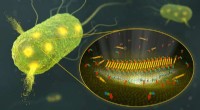
* DNA: Both bacteria and animals have DNA, but it's organized differently. Bacteria have a single, circular chromosome located in the cytoplasm, while animals have multiple, linear chromosomes within a nucleus.
Important Note: While both types of cells have DNA, it's important to remember that bacteria do not have a nucleus like animal cells do. Their DNA is located in a region called the nucleoid.