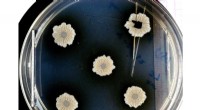
Here's a breakdown of what makes a pellicle:
* Composition: Primarily composed of microbial cells and extracellular polymeric substances (EPS) secreted by the microorganisms. These EPS can include proteins, polysaccharides, lipids, and nucleic acids.
* Formation: Microbial cells adhere to the air-liquid interface and secrete EPS, creating a matrix that binds them together. The pellicle can be quite strong, providing a protective barrier for the microorganisms within.
* Purpose: The pellicle can serve as a protective layer against environmental stresses, such as drying or UV radiation. It can also provide a surface for nutrient and gas exchange, facilitating microbial growth.
* Appearance: Pellicles can vary in appearance depending on the species of microorganisms involved. They may be transparent, opaque, slimy, or even colored.
* Significance: Pellicles can be a sign of microbial contamination in liquids or a desirable feature in some biotechnological applications. For example, pellicle formation is common in kombucha fermentation, where it's an important part of the process.
Here are some examples of pellicle formation:
* Bacterial cultures: Some bacteria, such as *Acetobacter* and *Lactobacillus*, commonly form pellicles.
* Fungal cultures: Fungi, such as *Candida albicans*, can also form pellicles.
* Algae cultures: Certain algae, such as *Chlamydomonas reinhardtii*, may form pellicles.
Understanding pellicle formation can be useful in various fields, including microbiology, biotechnology, and food science.