However, three very important and common cell types that are often studied are:
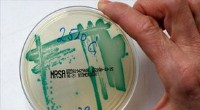
1. Prokaryotic Cells: These are the simplest type of cell, lacking a nucleus and other membrane-bound organelles. Examples include bacteria and archaea.
2. Animal Cells: These are eukaryotic cells found in animals and have a nucleus, various organelles, and a cell membrane.
3. Plant Cells: These are also eukaryotic cells with a nucleus and organelles, but they have additional structures like cell walls, chloroplasts, and vacuoles.
It's important to note that there are many other types of cells, and the three above are just examples.
Here's why focusing on these three can be beneficial:
* Prokaryotes represent the earliest life forms and provide valuable insight into cell evolution.
* Animal and plant cells are crucial for understanding multicellular organisms and their specific functions.
Let me know if you have any more questions about these cells or other cell types!