Here's a breakdown:
* Living thing: This means the organism is not a rock, water, or any other non-living entity.
* Made up of one or more cells: The basic unit of life is the cell. Some organisms are single-celled (like bacteria), while others are multicellular (like humans).
* Can carry out life processes: Organisms perform various functions to stay alive, including:
* Metabolism: The chemical reactions that allow the organism to obtain and use energy.
* Growth: Increasing in size and complexity.
* Adaptation: Changing over time to better suit their environment.
* Response to stimuli: Reacting to changes in their surroundings.
* Reproduction: Creating offspring to continue the species.
* Capable of reproducing: Organisms must be able to produce new individuals of their kind. This can be through sexual or asexual reproduction.
Examples of organisms:
* Animals: Dogs, cats, insects, fish, birds, etc.
* Plants: Trees, flowers, grasses, etc.
* Fungi: Mushrooms, molds, yeasts, etc.
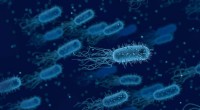
* Bacteria: Microscopic single-celled organisms.
* Viruses: While viruses can reproduce, they are not considered living organisms because they cannot carry out life processes on their own.
The study of organisms is called biology, and it is a vast and complex field that encompasses many different branches of science.