Premature mRNA (pre-mRNA):
* Newly transcribed RNA from DNA. It's a primary transcript that hasn't undergone any processing yet.
* Contains introns – non-coding sequences that need to be removed.
* Contains 5' cap – a modified guanine nucleotide added to the 5' end for protection and translation initiation.
* Contains polyadenylation signal – a sequence marking the end of the transcript, but the poly-A tail isn't added yet.
Mature mRNA:
* Processed pre-mRNA ready for translation.
* Introns removed through splicing, leaving only exons – the coding sequences.
* 5' cap added to the 5' end.
* Poly-A tail added to the 3' end for stability and translation initiation.
Here's a table summarizing the differences:
| Feature | Premature mRNA | Mature mRNA |
|---|---|---|
| Transcription | Newly transcribed | Processed |
| Introns | Present | Removed |
| Exons | Present | Present |
| 5' cap | Present | Present |
| Poly-A tail | Signal present, tail not added | Present |
| Ready for translation | No | Yes |
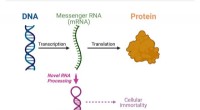
In short: Premature mRNA is the initial, unprocessed form of RNA, while mature mRNA is the final, processed form ready to be translated into protein.