Cell:
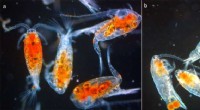
* Basic Unit of Life: A cell is the smallest fundamental unit of life. It's a self-contained unit capable of performing all the essential functions of life, such as metabolism, growth, and reproduction.
* Examples: Cells are the building blocks of all living organisms, from bacteria to plants to animals.
* Components: Cells are comprised of various organelles, each performing a specific task, enclosed within a cell membrane.
* Focus: The study of cells is called cell biology, which focuses on the structure, function, and behavior of individual cells.
System:
* Interconnected Components: A system is a collection of interconnected components that work together to achieve a common goal or function.
* Examples: A solar system, a computer system, a digestive system, a political system.
* Interactions: The behavior of a system depends on the interactions between its components.
* Focus: The study of systems is called systems theory, which explores how systems operate, adapt, and evolve.
Key Differences:
* Size and Complexity: Cells are smaller and simpler than systems, which can be very complex and encompass many individual components.
* Self-Sufficiency: Cells are self-sufficient units, capable of independent function, while systems rely on the interaction and collaboration of their components.
* Purpose: Cells are the fundamental building blocks of life, while systems are designed to achieve specific goals or perform specific functions.
Overlaps:
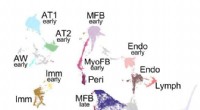
* Biological Systems: Many biological systems are comprised of cells working together. For example, the digestive system is composed of various organs made up of different cell types that work together to break down food.
* Cellular Systems: Cells themselves contain complex systems of organelles working together to carry out vital cellular processes.
In summary: Cells are the basic units of life, while systems are collections of interconnected components working together to achieve a specific purpose. While they are different concepts, they can also overlap, as systems can be composed of cells and cells can contain internal systems.