Here's why:
* Diversity of Life: The vast diversity of life on Earth means that organisms have evolved different strategies for reproduction and development. This leads to different starting points.
* Early Development: While many organisms start as a single cell (zygote), the subsequent stages of development can vary dramatically. For example:
* Animals: Some animals develop through a process called cleavage where the zygote rapidly divides into a ball of cells. This process can differ greatly in how it occurs.
* Plants: Plants have a different developmental pathway, often involving spores and the formation of a multicellular embryo within a seed.
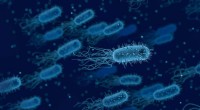
* Bacteria: Bacteria reproduce by binary fission, a simple process of cell division.
* Evolutionary History: The differences in early development reflect the evolutionary history of each organism. Organisms share common ancestry but have diverged over time, leading to unique developmental pathways.
In summary: While there are some similarities in the very early stages of development (like the existence of a single cell), the subsequent stages and processes vary greatly between different organisms.