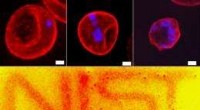
Bacterial Cell:
* Individual: A single, microscopic living organism. It's the basic unit of life for bacteria.
* Can't be seen directly: Too small to be seen without a microscope.
* Metabolically active: Carries out all the functions of life, including growth, reproduction, and response to stimuli.
Colony-Forming Unit (CFU):
* Visible cluster: A group of bacterial cells that originated from a single bacterial cell.
* Visible to the naked eye: Appears as a dot, mound, or spread on a petri dish.
* Represents a single bacterial cell: Each colony is formed from one bacterial cell that underwent many rounds of division.
* Used for counting bacteria: CFUs are counted to estimate the number of viable bacteria in a sample.
In Summary:
* A bacterial cell is a single, microscopic living organism.
* A CFU is a visible cluster of bacterial cells that originated from a single cell.
Think of it like this:
* Imagine a single seed (bacterial cell).
* That seed grows into a plant (CFU).
The CFU is a visible representation of the original bacterial cell's potential to multiply.
Important Note:
* Not all bacteria in a sample will form colonies: Some bacteria might be dead, damaged, or unable to grow under the given conditions. This means the CFU count is an estimate of viable bacteria, not the total number of bacteria present.