1. Structure of the Nitrogenous Base:
* Adenine (A) and Guanine (G) are purines, which have a double-ring structure.
* Cytosine (C) and Thymine (T) are pyrimidines, which have a single-ring structure.
2. Chemical Structure of the Base:
* Adenine (A): Has an amino group at position 6 and a keto group at position 2.
* Guanine (G): Has an amino group at position 2 and a keto group at position 6.
* Cytosine (C): Has an amino group at position 4 and a keto group at position 2.
* Thymine (T): Has a methyl group at position 5 and a keto group at position 2.
3. Base Pairing:
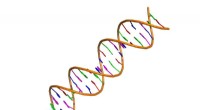
* Adenine (A) pairs with Thymine (T) via two hydrogen bonds.
* Guanine (G) pairs with Cytosine (C) via three hydrogen bonds.
4. Function:
While all nucleotides contribute to the structure of DNA, they also play specific roles in other cellular processes:
* Adenine (A): Used in ATP (adenosine triphosphate), the primary energy currency of cells.
* Guanine (G): Precursor to GTP (guanosine triphosphate), involved in protein synthesis.
* Cytosine (C): Involved in various metabolic processes.
* Thymine (T): Specific to DNA and essential for DNA replication.
In summary, the four nucleotides differ in their base structure, chemical composition, base pairing properties, and their involvement in different cellular processes.