1. All living organisms are composed of cells.
2. The cell is the basic unit of life.
3. All cells arise from pre-existing cells.
Several scientists contributed to the development of this theory over time, building upon each other's work. Here are some key figures and their contributions:
Robert Hooke (1665):
* First to observe and name cells.
* Used a primitive microscope to examine thin slices of cork, observing small compartments he called "cells" due to their resemblance to the cells of a monastery.
Anton van Leeuwenhoek (1674):
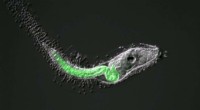
* Improved the microscope and observed single-celled organisms like bacteria and protozoa, which he called "animalcules."
* His observations helped demonstrate the diversity of life at the microscopic level.
Matthias Schleiden (1838):
* Studied plant tissues and concluded that all plants are composed of cells.
Theodor Schwann (1839):
* Extended Schleiden's observations to animal tissues, proposing that all living things are composed of cells.
Rudolf Virchow (1855):
* Proposed the third tenet of the cell theory, that all cells arise from pre-existing cells. This contradicted the prevailing idea of spontaneous generation.
Key Points to Remember:
* The cell theory was not formulated overnight, but rather developed over several decades through the work of many scientists.
* Each contribution built upon the previous findings and led to a deeper understanding of the structure and origin of life.
* The cell theory remains a fundamental principle of biology, guiding our understanding of living organisms and their functions.
The cell theory is an excellent example of how scientific knowledge progresses through observation, experimentation, and collaboration.