Here's why:
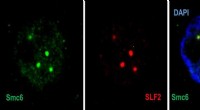
* DNA Structure: DNA is a long, complex molecule that carries the genetic instructions for an organism. It's organized into structures called chromosomes.
* Nucleus Function: The nucleus is the control center of the cell. It houses the chromosomes and plays a critical role in cell division and protein synthesis.
* Protection: The nucleus protects the DNA from damage and ensures its proper replication during cell division.
There are some exceptions to this rule:
* Prokaryotes: Bacteria and archaea, which are single-celled organisms, don't have a nucleus. Their DNA is located in a region called the nucleoid, which is not enclosed by a membrane.
* Mitochondria and Chloroplasts: These organelles have their own DNA, which is separate from the DNA in the nucleus. This is because they were once independent organisms that were incorporated into eukaryotic cells.