1. Common Ancestry:
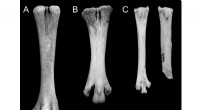
* Shared Features: Homologies, whether anatomical, genetic, or developmental, point to a common ancestor from which these features were inherited.
* Tracing Evolutionary History: By comparing homologous structures across species, we can trace the evolutionary history of those structures and the relationships between different species.
* Deep Time Connections: Homologies can reveal surprisingly deep connections between seemingly unrelated organisms, demonstrating the interconnectedness of all life on Earth.
2. Evolutionary Processes:
* Divergent Evolution: Homologous structures can be adapted for different functions in different lineages, illustrating divergent evolution (e.g., the forelimbs of bats, whales, and humans).
* Convergent Evolution: Even though they are not homologous, analogous structures can develop similar forms in different lineages due to similar environmental pressures (e.g., the wings of birds and bats). By studying both homologous and analogous structures, we can better understand the interplay between shared ancestry and environmental influences on evolution.
* Rates of Evolution: The degree of divergence between homologous structures can indicate the amount of time that has passed since their shared ancestor.
3. Understanding Evolutionary Relationships:
* Phylogenetic Trees: Homologies are fundamental to constructing phylogenetic trees, which depict the evolutionary relationships between different species.
* Classifying Organisms: Homologies play a crucial role in modern biological classification systems, helping scientists to group organisms based on their evolutionary relationships.
4. Insights into Development:
* Developmental Homologies: Comparing the development of homologous structures in different species can provide insights into how these structures evolved and how developmental pathways change over time.
* Evo-Devo: The field of evolutionary developmental biology (evo-devo) focuses on understanding how changes in developmental processes contribute to evolutionary change. Homologies are essential for studying evo-devo.
Examples:
* Vertebrate Limbs: The forelimbs of all tetrapods (amphibians, reptiles, birds, and mammals) are homologous structures, suggesting a common ancestor.
* Genetic Homologies: Humans and chimpanzees share about 98.8% of their DNA, highlighting our close evolutionary relationship.
* Developmental Homologies: The embryonic development of different vertebrates, including humans, reveals similarities in early stages, suggesting a common developmental program.
In summary, homologies are powerful tools that allow us to understand the evolutionary relationships between species, trace the history of life on Earth, and investigate the processes that have shaped the diversity of life we see today.