* Plants: Photosynthetic organisms that produce their own food.
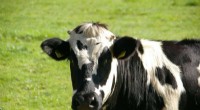
* Animals: Multicellular organisms that consume other organisms for food.
* Fungi: Heterotrophic organisms that obtain nutrients by absorbing them from their surroundings.
* Prokaryotes: Single-celled organisms lacking a nucleus and other membrane-bound organelles.
So, what's left? The answer is viruses.
While viruses are sometimes called "non-living," they exhibit some characteristics of life. They can reproduce, though they need a host cell to do so. They also evolve and adapt. However, they lack many key features of living things, such as being able to maintain a stable internal environment (homeostasis) or carrying out metabolism independently.
Therefore, viruses are often considered a separate category of biological entities, rather than a true kingdom of life.