Light Microscopes:
* Compound Light Microscopes: The most basic type, these microscopes use visible light and lenses to magnify objects. They can magnify up to 1000x and are used for viewing thin slices of tissue, cells, and small organisms.
* Stereo Microscopes (Dissecting Microscopes): These microscopes provide a three-dimensional view of objects and are useful for examining larger specimens, such as insects or plants. They have lower magnification than compound light microscopes (typically 10x to 40x).
* Phase-Contrast Microscopes: These microscopes enhance the contrast of transparent objects by exploiting differences in refractive index. This is particularly useful for viewing living cells and tissues without staining.
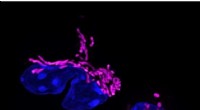
* Fluorescence Microscopes: These microscopes use fluorescent dyes to illuminate specific structures within cells or tissues. The dyes absorb light at one wavelength and emit light at a longer wavelength, allowing researchers to visualize specific molecules or processes.
Electron Microscopes:
* Transmission Electron Microscopes (TEM): These microscopes use a beam of electrons to create an image. TEMs can achieve much higher magnification than light microscopes (up to 1 million times) and are used to study the internal structure of cells and other tiny objects.
* Scanning Electron Microscopes (SEM): These microscopes use a focused beam of electrons to scan the surface of a sample. SEMs provide detailed images of the surface topography and are useful for studying the external features of cells and other objects.
Other Specialized Microscopes:
* Confocal Microscopes: These microscopes use lasers to scan a specimen and create sharp images of specific planes within it. They are used for studying thick specimens and can be used to create 3D reconstructions.
* Atomic Force Microscopes (AFM): These microscopes use a sharp probe to scan the surface of a sample. AFM can achieve atomic-scale resolution and is used to study the topography and properties of surfaces.
The specific type of microscope a biologist uses depends on the research question being addressed. For example, a biologist studying the internal structure of a bacteria cell might use a TEM, while a biologist studying the surface of a plant leaf might use an SEM.