What makes a cell eukaryotic?
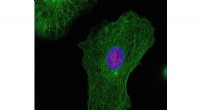
* Membrane-bound nucleus: The most defining feature of a eukaryotic cell is the presence of a nucleus, a compartment within the cell that houses the genetic material (DNA). This nucleus is surrounded by a double membrane.
* Organelles: Eukaryotic cells have a variety of internal membrane-bound structures called organelles, each with specialized functions (like mitochondria for energy production, Golgi apparatus for protein packaging, endoplasmic reticulum for protein synthesis, etc.).
* Larger size: Eukaryotic cells are typically much larger than prokaryotic cells.
* More complex: They have a greater level of internal organization and complexity.
Observations that prove a cell is eukaryotic:
1. Presence of a nucleus: Using a light microscope, you'd see a distinct, round, or oval structure within the cell that is clearly separate from the rest of the cytoplasm. This is the nucleus.
2. Presence of other organelles: Under a light microscope, you might be able to observe organelles like mitochondria, chloroplasts (in plant cells), or vacuoles. Electron microscopy would reveal more intricate details of the organelles.
3. Presence of internal membranes: Under an electron microscope, you would see a complex network of internal membranes, which form the various organelles.
4. Size: Eukaryotic cells are generally much larger than prokaryotic cells, often visible under a light microscope.
Examples:
* Animal cells: Observe a cheek cell under a microscope. You will clearly see the nucleus.
* Plant cells: Examine a leaf cell under a microscope. You'll see the nucleus, as well as chloroplasts and a large central vacuole.
* Fungal cells: Fungi are also eukaryotes, with nuclei and other organelles.
Important Note: Prokaryotic cells, like bacteria, lack a nucleus and other membrane-bound organelles. They are much simpler in structure.