Emergent Properties:
* Definition: Emergent properties are characteristics that arise from the complex interactions of individual components within a system. They are not present in the individual components themselves.
* Example: Water is an emergent property of hydrogen and oxygen atoms. While neither hydrogen nor oxygen is liquid at room temperature, their combination forms a liquid with unique properties.
Evolution as an Emergent Property:
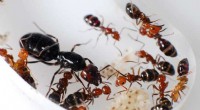
* Living systems are complex: Organisms are made up of interconnected systems (cells, organs, etc.) that interact and evolve.
* Individual components don't evolve: Individual genes, cells, or organisms don't evolve in the sense of a directed, goal-oriented process.
* Evolution arises from interactions: Evolution occurs due to the interplay of factors like:
* Variation: Differences within populations due to mutations and genetic recombination.
* Selection: Environmental pressures favor certain traits, leading to differential survival and reproduction.
* Inheritance: Traits are passed down to offspring.
* Collective effect: These interactions create a pattern of change over time that we call evolution. It emerges from the collective behavior of individual components within the system.
In summary: Evolution is not a property of individual genes or organisms, but a property that emerges from the complex interactions within a population of organisms over time.
Further Points:
* This is a complex and debated topic, with different perspectives on the exact definition of "emergent property."
* Some argue that evolution is more than just an emergent property, but a fundamental principle of life itself.
* Understanding evolution as an emergent property helps us grasp its complexity and appreciate the interconnectedness of biological systems.