Here's a breakdown:
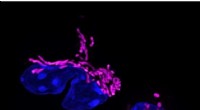
* Cytoplasm: The gel-like substance that fills the space between the cell membrane and the nucleus (in eukaryotic cells). It's primarily composed of water, salts, and proteins.
* Prokaryotic cells: Simple cells without a nucleus or other membrane-bound organelles. They have cytoplasm, but it's not organized in the same way as in eukaryotic cells.
* Eukaryotic cells: Complex cells with a nucleus and other membrane-bound organelles. They also have cytoplasm, but it's compartmentalized and contains a more elaborate network of structures.
Think of it this way: You wouldn't say "a room is a house," because a room is a part of a house. Similarly, cytoplasm is a part of both prokaryotic and eukaryotic cells.