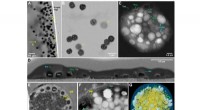
Here's why:
* Sample Preparation: Electron microscopy requires extremely thin samples, often less than 100 nanometers thick. This preparation process, which involves dehydration, fixation, and embedding, is fatal to living cells.
* Vacuum Environment: Electron microscopes operate under a high vacuum to prevent the electron beam from scattering. This environment would instantly kill living cells.
However, there are specialized techniques that allow us to view biological processes in near-living conditions:
* Cryo-electron microscopy (cryo-EM): This technique rapidly freezes samples, preserving their structure in a near-native state. It's revolutionized our understanding of biological molecules and has been used to image viruses, proteins, and even entire cells at high resolution.
* Environmental Scanning Electron Microscopy (ESEM): This technique allows imaging of samples in a low-pressure, humidified environment, making it possible to observe some aspects of biological activity, including the growth of bacteria.
Why use electron microscopes at all for biological research?
* High Resolution: Electron microscopes provide much higher resolution than light microscopes, allowing us to see structures as small as individual atoms.
* Detailed Morphology: We can study the internal structures of cells, including organelles, membranes, and protein complexes, in great detail.
In summary:
While traditional electron microscopy is not suitable for viewing living cells, specialized techniques like cryo-EM and ESEM offer valuable insights into the structure and dynamics of biological systems.