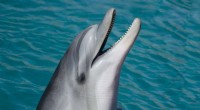
* Organism: A single, individual living being. It can be a bacterium, a plant, an animal, a fungus, or anything else that exhibits the characteristics of life (metabolism, growth, reproduction, etc.). Think of a specific dog, a particular tree, or a single bacterium.
* Species: A group of organisms that can interbreed and produce fertile offspring. Members of the same species share a common gene pool and are reproductively isolated from other species. Think of all dogs (Canis lupus familiaris) as a species, all oak trees (Quercus spp.) as a species, or all E. coli bacteria as a species.
In simpler terms:
* Organism: An individual (like you, me, or your pet).
* Species: A group of similar individuals that can have babies together (like all humans, all cats, or all oak trees).
Key points to remember:
* An organism belongs to a species.
* There are many organisms within a single species.
* Species are defined by their ability to interbreed and produce fertile offspring.