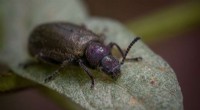
1. Variation: Individuals within a population have slight differences in their traits (e.g., beak size, color, speed). This variation arises from random mutations in their DNA.
2. Inheritance: These traits are passed down from parents to offspring.
3. Competition: Individuals must compete for resources like food, shelter, and mates.
4. Survival and Reproduction: Individuals with traits better suited to their environment are more likely to survive and reproduce. They pass on their advantageous traits to their offspring.
5. Gradual Change: Over generations, the frequency of advantageous traits increases within the population, while less beneficial traits decrease. This leads to a gradual change in the overall characteristics of the population, known as evolution.
Key Points about Evolution:
* It's not about individual organisms changing: Evolution acts on populations over many generations.
* It's a slow process: Evolutionary change happens gradually, over long periods of time.
* It's not goal-oriented: Evolution doesn't have a predetermined direction or a goal.
* It's supported by overwhelming evidence: There's a massive amount of evidence from fossils, genetics, and the study of living organisms that supports the theory of evolution.
Examples of Evolution:
* The evolution of antibiotic resistance in bacteria: Bacteria with genes that make them resistant to antibiotics survive and reproduce, leading to an increase in antibiotic-resistant populations.
* The evolution of the peppered moth: The color of the moth adapted to match the environment, becoming darker in polluted areas and lighter in cleaner areas.
The theory of evolution is one of the most important and well-supported theories in biology. It explains the diversity of life on Earth and provides a framework for understanding how life has changed over millions of years.