Here's why:
* Against the concentration gradient: Active transport moves substances *against* their natural tendency to move from high to low concentration. This requires energy input.
* Requires energy: Unlike passive transport (like diffusion), active transport needs energy to work. This energy is often supplied by ATP, the cell's energy currency.
Examples of active transport include:
* The sodium-potassium pump, which maintains the concentration gradients of sodium and potassium ions across cell membranes.
* The uptake of glucose into cells, which is crucial for cellular metabolism.
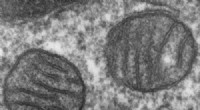
* The movement of protons across the mitochondrial membrane, which powers ATP production.