Here's why:
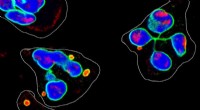
* Multicellularity: Life on Earth is broadly divided into two categories: unicellular (single-celled) and multicellular (many-celled). Multicellular organisms have specialized cells that work together to form tissues, organs, and organ systems.
* Complexity: The more complex an organism, the more cells it generally has. For example, a human being has trillions of cells, while a simple worm might only have a few hundred.
* Size: Larger organisms tend to have more cells. A large tree, for instance, has far more cells than a tiny ant.
So, while bacteria and some other microscopic life forms are single-celled, many organisms we are familiar with, from plants and animals to fungi, are made of countless cells working together.