1. Meristematic Tissues:
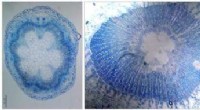
* Definition: Composed of undifferentiated cells that have the ability to divide continuously and give rise to new cells.
* Location: Found in specific regions of the plant, such as the tips of roots and stems (apical meristems), the cambium layer (lateral meristems), and the nodes of stems (intercalary meristems).
* Function: Responsible for plant growth, development, and repair.
* Types:
* Apical meristems: Located at the tips of roots and stems, responsible for primary growth (elongation).
* Lateral meristems: Found in the cambium layer, responsible for secondary growth (increase in girth).
* Intercalary meristems: Located at the nodes of stems, responsible for growth in length of stems.
2. Permanent Tissues:
* Definition: Composed of cells that have lost the ability to divide and have specialized structures and functions.
* Location: Found throughout the plant body, forming various organs and tissues.
* Function: Perform specific roles in the plant, such as conducting water and nutrients, providing support, and storing food.
* Types:
* Simple Permanent Tissues:
* Parenchyma: Thin-walled, unspecialized cells that perform various functions like storage, photosynthesis, and gas exchange.
* Collenchyma: Thick-walled, elongated cells that provide support and flexibility to young plant parts.
* Sclerenchyma: Thick-walled, rigid cells with lignin deposits that provide strength and support to mature plant parts.
* Complex Permanent Tissues:
* Xylem: Composed of tracheids and vessel elements, responsible for conducting water and minerals from roots to other parts of the plant.
* Phloem: Composed of sieve tubes and companion cells, responsible for transporting sugars and other organic compounds throughout the plant.
In summary, plant tissues are categorized into meristematic tissues (for growth) and permanent tissues (for specialized functions). The different types of tissues work together to ensure the survival and growth of the plant.