Here's the breakdown:
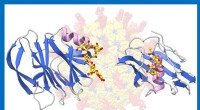
* All matter, living or non-living, is made of atoms and molecules. Atoms are the fundamental building blocks of everything. They combine to form molecules.
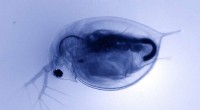
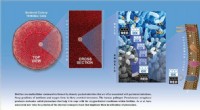
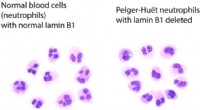
* Living things are organized in a way that non-living things are not. Cells are the fundamental units of life. They are highly complex and organized structures containing many different molecules that work together to carry out life processes.
* Non-living things can be made of atoms and molecules that are arranged in various ways, but they lack the complexity and organization of cells. For example, a rock is made of minerals, which are made of atoms and molecules, but it doesn't have cells or the ability to carry out life functions.
So, the key difference isn't the basic building blocks, but how those building blocks are organized. Living things have a level of organization and complexity that non-living things do not, with cells as the fundamental unit of this organization.
Here's a simplified analogy:
* Atoms and molecules are like bricks.
* Non-living things are like a pile of bricks.
* Living things are like a house built from bricks.
The house (living thing) is more complex and organized than just a pile of bricks (non-living thing).