Prokaryotes and eukaryotes are two major categories of living organisms, distinguished by their cellular structure.
Prokaryotes:
* Simple: They lack a true nucleus and other membrane-bound organelles.
* Small: Their cells are generally smaller than eukaryotic cells.
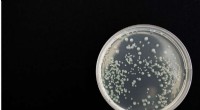
* Diverse: They encompass bacteria and archaea, which are incredibly diverse and found in almost every environment.
* Examples: Bacteria like E. coli and archaea like methanogens.
Eukaryotes:
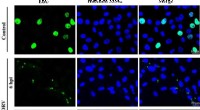
* Complex: They have a true nucleus and other membrane-bound organelles, allowing for compartmentalization of cellular functions.
* Larger: Their cells are generally larger than prokaryotic cells.
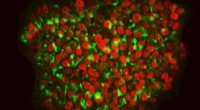
* Varied: They encompass a wide range of organisms, including plants, animals, fungi, and protists.
* Examples: Humans, trees, mushrooms, amoebas.
Here's a table summarizing the key differences:
| Feature | Prokaryotes | Eukaryotes |
|---------------------|---------------------------------------------|-------------------------------------------|
| Nucleus | Absent | Present |
| Organelles | Absent (except ribosomes) | Present (e.g., mitochondria, Golgi, ER) |
| Cell size | Generally smaller | Generally larger |
| Genetic material | Single circular chromosome in cytoplasm | Multiple linear chromosomes in nucleus |
| Cell wall | Often present, chemically diverse | Present in plants and fungi, absent in animals |
| Examples | Bacteria, archaea | Plants, animals, fungi, protists |
In essence:
* Prokaryotes are the simpler, smaller organisms, while eukaryotes are the more complex and larger ones.
* The presence of a nucleus and other membrane-bound organelles defines the difference between these two fundamental life forms.
Let me know if you have any other questions!