Living organisms are distinguished from non-living things by a set of defining characteristics. These characteristics, often called the "seven characteristics of life," are:
1. Organization: Living organisms are highly organized, with cells as their basic structural and functional units. They exhibit a hierarchy of organization from atoms to biomolecules, organelles, cells, tissues, organs, organ systems, and finally the whole organism.
2. Metabolism: All living organisms carry out metabolic processes. This involves chemical reactions within the organism, including both anabolism (building complex molecules) and catabolism (breaking down complex molecules). Metabolism allows organisms to acquire and utilize energy for growth, repair, and movement.
3. Homeostasis: Living organisms maintain a stable internal environment despite external changes. This is achieved through various regulatory mechanisms that keep factors like temperature, pH, and water balance within specific limits.
4. Growth and Development: Living organisms increase in size and complexity over time. Growth involves an increase in the number of cells or the size of individual cells. Development involves changes in the organism's structure and function as it matures.
5. Reproduction: Living organisms produce new individuals of the same species through either sexual or asexual reproduction. This ensures the continuation of the species.
6. Adaptation: Living organisms evolve over time in response to changes in their environment. These adaptations, which may be structural, behavioral, or physiological, help organisms survive and reproduce in their environment.
7. Response to Stimuli: Living organisms respond to changes in their environment, both internal and external. These responses can be simple, like a plant turning towards sunlight, or complex, like an animal's fight-or-flight response to danger.
Important Notes:
* These seven characteristics are not independent of each other, but rather interconnected and contribute to the overall complexity of life.
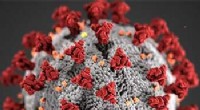
* Viruses, which are considered non-living, possess some of these characteristics, like organization and reproduction, but lack others like metabolism and homeostasis.
* Some argue that characteristics like responsiveness and adaptation are more complex expressions of the other characteristics rather than being separate traits.
Understanding these characteristics allows us to define life and differentiate it from non-living entities. They also provide a framework for studying the diversity and complexity of the living world.