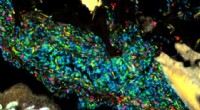
Here's a breakdown:
* Cytoplasm: This is the "soup" that all the other cell parts float in. It's mostly water, but it also contains dissolved nutrients, salts, and proteins.
* Organelles: These are the "organs" of the cell, each with a specific function. Some important organelles include:
* Nucleus: This is the control center of the cell, containing DNA.
* Mitochondria: These are the "powerhouses" of the cell, generating energy.
* Ribosomes: These are responsible for protein synthesis.
* Endoplasmic reticulum: This is a network of membranes involved in protein and lipid synthesis.
* Golgi apparatus: This modifies and packages proteins.
* Lysosomes: These are the "recycling centers" of the cell, breaking down waste.
The specific composition and structure of the cytoplasm and organelles can vary depending on the type of cell. For example, muscle cells have more mitochondria to provide energy for contraction, while nerve cells have a complex network of microtubules to transport signals.
In summary, the stuff inside a cell is a complex and dynamic environment filled with essential components that allow the cell to function and perform its role in the body.