The production and release of proteins, known as protein synthesis and secretion, is a complex process involving multiple steps and cellular components. Here's a simplified breakdown:
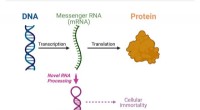
1. Transcription: The journey begins in the nucleus, where DNA contains the genetic code for proteins. A specific gene is transcribed into messenger RNA (mRNA), a copy of the genetic instructions.
2. mRNA Processing: The mRNA molecule undergoes modifications, such as splicing, to remove non-coding regions and prepare it for translation.
3. Translation: The mRNA travels out of the nucleus into the cytoplasm and binds to ribosomes. Ribosomes read the mRNA code and assemble amino acids into a polypeptide chain, following the instructions encoded in the mRNA.
4. Folding and Modification: The polypeptide chain folds into its unique 3D structure, guided by chaperone proteins. It might also undergo further modifications, such as glycosylation or phosphorylation.
5. Sorting and Targeting: If the protein is destined for secretion, it will be targeted to the endoplasmic reticulum (ER), a network of membranes within the cytoplasm. Here, the protein enters the lumen, the space between ER membranes.
6. ER Quality Control: The protein undergoes quality control within the ER. Misfolded or incomplete proteins are degraded, while properly folded proteins are transported to the Golgi apparatus.
7. Golgi Processing: The Golgi apparatus further modifies and sorts proteins. It adds sugars, lipids, or other molecules to the proteins, directing them to their final destination.
8. Packaging and Transport: The protein is packaged into vesicles, small membrane-bound sacs. These vesicles bud off from the Golgi and travel to the cell membrane.
9. Secretion: The vesicle fuses with the cell membrane, releasing the protein outside the cell. This process is known as exocytosis.
Example: Imagine a cell making an enzyme that breaks down a specific sugar. The DNA in the nucleus contains the instructions for this enzyme. The gene is transcribed into mRNA, which is then translated into the enzyme protein. The enzyme folds correctly and is transported to the ER, then the Golgi, where it gets packaged into a vesicle. Finally, the vesicle fuses with the cell membrane, releasing the enzyme outside the cell to break down the sugar.
Important Note: This is a simplified description. The process of protein production and secretion is highly regulated and involves many other cellular components and complex mechanisms.