Understanding Osmosis
* Osmosis is the movement of water across a semi-permeable membrane from an area of high water concentration (low solute concentration) to an area of low water concentration (high solute concentration). Think of it as water trying to equalize the "salty-ness" on both sides of the membrane.
Animal Cells and Water
* Animal cells lack a rigid cell wall, unlike plant cells. This means their cell membrane is the only barrier between the internal environment and the external environment.
* Animal cells are typically hypertonic compared to their surrounding environment. This means the concentration of dissolved substances (solutes) inside the cell is higher than outside.
The Problem
* Water moves into the cell: When an animal cell is placed in a hypotonic solution (where the external environment has a lower solute concentration), water will rush into the cell through osmosis.
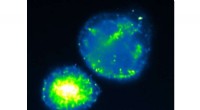
* Cell swells and bursts: The influx of water causes the cell to swell. Since there's no rigid cell wall to prevent it, the cell membrane can stretch only so far before it ruptures, causing the cell to burst. This process is called cytolysis.
In Summary
Osmosis causes an animal cell to burst because:
1. Animal cells have no cell wall to resist pressure.
2. They are hypertonic, meaning they have a higher solute concentration than the surrounding environment.
3. When placed in a hypotonic solution, water rushes into the cell, causing it to swell and eventually burst.