* Cells are the fundamental building blocks: All living organisms, from the simplest bacteria to complex humans, are made up of cells. They are the smallest structures that can carry out all the processes necessary for life.
* Self-contained units: Cells are self-contained and can perform essential functions like metabolism, reproduction, and response to stimuli.
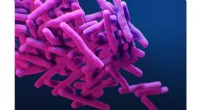
* Varying sizes and complexity: While cells are the basic unit, their size and complexity vary greatly. There are single-celled organisms (like bacteria) and multicellular organisms (like humans) that have billions of cells.
* Smaller structures exist: Within a cell, there are smaller structures like organelles (e.g., mitochondria, nucleus) which perform specific functions. These organelles are not considered living on their own but are essential parts of the cell.
Therefore, while cells are the smallest structures that can independently carry out life processes, they are not the smallest units of life.