Here's why:
* Isolation: Before you can study a bacterium, you need to isolate it from any other organisms that might be present. A pure culture ensures you're working with only one type of bacteria.
* Accuracy: Identifying a bacterium based on its characteristics requires a sample that isn't contaminated with other species.
* Further Testing: Once a pure culture is obtained, you can then proceed with various tests like:
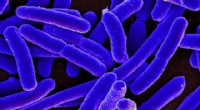
* Microscopy: To observe the bacterium's morphology (shape, arrangement) and staining properties.
* Biochemical tests: To assess the bacterium's metabolic capabilities.
* Molecular techniques: To analyze the bacterium's DNA or RNA, often for species-specific identification.
How to obtain a pure culture:
* Streak Plate Method: A common technique where a sample is streaked across an agar plate, diluting the bacteria to the point where individual colonies can grow.
* Enrichment Techniques: Using specific media that favors the growth of the target bacterium.
* Selective Media: Using media that inhibits the growth of other bacteria, allowing the target bacterium to grow.
Remember: The method used to obtain a pure culture will depend on the specific sample and the suspected type of bacteria.