Here's how it works:
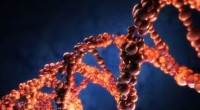
1. Unwinding: The double helix of DNA unwinds, separating the two strands. This is done by enzymes like helicase.
2. Base Pairing: Each separated strand acts as a template for a new strand. Free nucleotides in the surrounding environment pair with the exposed bases on the template strands (A with T, C with G). This pairing follows the base pairing rules of DNA.
3. Joining: An enzyme called DNA polymerase joins the new nucleotides together, forming a new complementary strand for each of the original strands.
4. Two Identical Copies: The process results in two identical DNA molecules, each consisting of one original strand and one newly synthesized strand.
Why semi-conservative? The term "semi-conservative" refers to the fact that each new DNA molecule retains one of the original strands from the parent molecule. This means that half of the original DNA molecule is conserved in each new copy.
This theory was proposed by Watson and Crick and has been extensively confirmed through experiments. It's the fundamental mechanism by which genetic information is passed on from one generation to the next.