Here's why:
* Electron microscopes require a vacuum: The primary limitation is that electron microscopes need a vacuum to operate. This vacuum environment is incompatible with life. Living cells need water and oxygen to survive, and the vacuum would instantly kill them.
* Sample preparation: Even if we could get a living cell into a vacuum, the preparation process needed for electron microscopy would be fatal. This often involves fixing (preserving) the cell, dehydrating it, and coating it with heavy metals to enhance contrast. These steps all kill the cell.
* Damage from electron beam: The electron beam used in electron microscopes has high energy. This can damage and even destroy the cell's structure, making it difficult to see its true form.
What we can do:
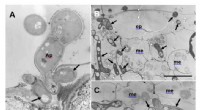
* Cryo-electron microscopy (Cryo-EM): A technique that allows us to study biological samples, including cells, in a frozen state. This minimizes damage from the electron beam and preserves the sample's natural structure. Cryo-EM is becoming increasingly important for studying biological processes and structures at an atomic level.
* Live-cell imaging: While not using electron microscopes, there are other advanced microscopy techniques, like light sheet microscopy and super-resolution microscopy, that can capture dynamic processes within living cells.
Therefore, while we can't directly observe living cells under an electron microscope due to the limitations, we can use specialized techniques to investigate their structure and function in ways that were previously impossible.