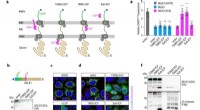
Here's why:
* It's a barrier: The cell membrane acts as a selective barrier, controlling what enters and exits the cell. This is crucial for maintaining the cell's internal environment and carrying out its functions.
* It's made of phospholipids: The cell membrane is primarily composed of a phospholipid bilayer. These molecules have a hydrophilic (water-loving) head and a hydrophobic (water-fearing) tail. This structure creates a barrier that separates the inside of the cell from the outside.
* It's fluid: The cell membrane is not rigid. It's a fluid mosaic, meaning that its components can move around within the membrane. This allows for flexibility and adaptability.
While other structures like the cell wall in plant cells and the capsule in bacteria also provide structural support and protection, the cell membrane is the fundamental boundary that defines the cell itself.