Functions of the Spindle:
* Chromosomes Separation: The spindle fibers attach to chromosomes at their centromeres (the constricted region) and pull them apart, ensuring that each daughter cell receives a complete set of chromosomes.
* Cell Pole Separation: The spindle also helps separate the two poles of the dividing cell, contributing to the overall division process.
* Cytokinesis: In some organisms, the spindle plays a role in directing the formation of the cell plate during cytokinesis, the process that divides the cytoplasm and completes cell division.
Characteristics of the Spindle:
* Microtubule Composition: The spindle is made up of microtubules, which are hollow cylindrical structures formed from tubulin proteins.
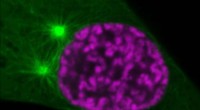
* Centrioles (Animal Cells): In animal cells, the spindle originates from the centrosomes, which contain centrioles. The centrioles organize and nucleate microtubule growth, creating a bipolar structure with poles at opposite ends of the cell.
* Spindle Poles: The spindle has two poles, often located near the opposite ends of the cell.
* Kinetochore Microtubules: These microtubules attach directly to the chromosomes at their kinetochores (specialized regions on the centromeres).
* Polar Microtubules: These microtubules extend from one pole to the other, helping to push the poles apart.
* Astral Microtubules: These microtubules radiate from the poles towards the cell membrane, potentially contributing to spindle positioning.
Overall, the spindle apparatus is a dynamic and essential structure for accurate chromosome segregation during cell division, ensuring genetic continuity and proper development.