1. Cell Type:
* Prokaryotic:
* Lack a nucleus: DNA is located in a region called the nucleoid.
* No membrane-bound organelles: Ribosomes are the only visible organelles.
* Smaller in size: Typically 1-10 micrometers in diameter.
* Examples: Bacteria and Archaea
* Eukaryotic:
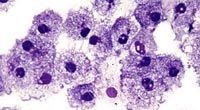
* Presence of a nucleus: Contains the cell's DNA.
* Presence of membrane-bound organelles: Such as mitochondria, endoplasmic reticulum, Golgi apparatus, etc.
* Larger in size: Typically 10-100 micrometers in diameter.
* Examples: Plants, animals, fungi, protists
2. Cell Shape and Size:
* Shape: Round, square, elongated, irregular, etc.
* Size: Relative size compared to other cells, or to a known scale.
* These factors can provide clues about the organism's function and environment. For example, a long, thin cell might be a muscle cell, while a spherical cell could be a fat cell.
3. Organelles:
* Presence and structure of specific organelles:
* Mitochondria: Important for energy production (found in eukaryotes).
* Chloroplasts: Sites of photosynthesis (found in plants and algae).
* Golgi apparatus: Processes and packages proteins.
* Endoplasmic reticulum: Network involved in protein synthesis and lipid production.
* Vacuoles: Storage compartments.
* These organelles can provide further information about the organism's lifestyle and energy source.
4. Cell Wall:
* Presence and structure of a cell wall:
* Plants: Cellulose-based cell wall.
* Fungi: Chitin-based cell wall.
* Bacteria: Peptidoglycan-based cell wall.
* The presence of a cell wall can indicate the organism's domain (e.g., plant, fungus, bacteria).
5. Other Features:
* Cytoskeleton: Network of protein filaments that provide structure and support.
* Flagella or Cilia: Appendages that aid in movement.
* Pigments: Coloration can indicate the organism's ability to photosynthesize or other metabolic processes.
By carefully observing these features, you can make educated inferences about the organism from which the cell originated. However, it's important to note that:
* Some features may be similar across different organisms.
* Further tests and analysis may be needed for definitive identification.
For a more precise identification, additional tests like DNA sequencing or biochemical analysis are usually necessary.